Meet Alice Stephenson (sssilk666): London Designer Redefining Dark Romantic Fashion
Fashion has always navigated the delicate balance between surface and extension; how fabric sits on the body, but also its ability to transform it. There’s a constant tension between wanting clothes to function – to feel good, to move and be worn – and wanting them to operate as image, expression, and confrontation.
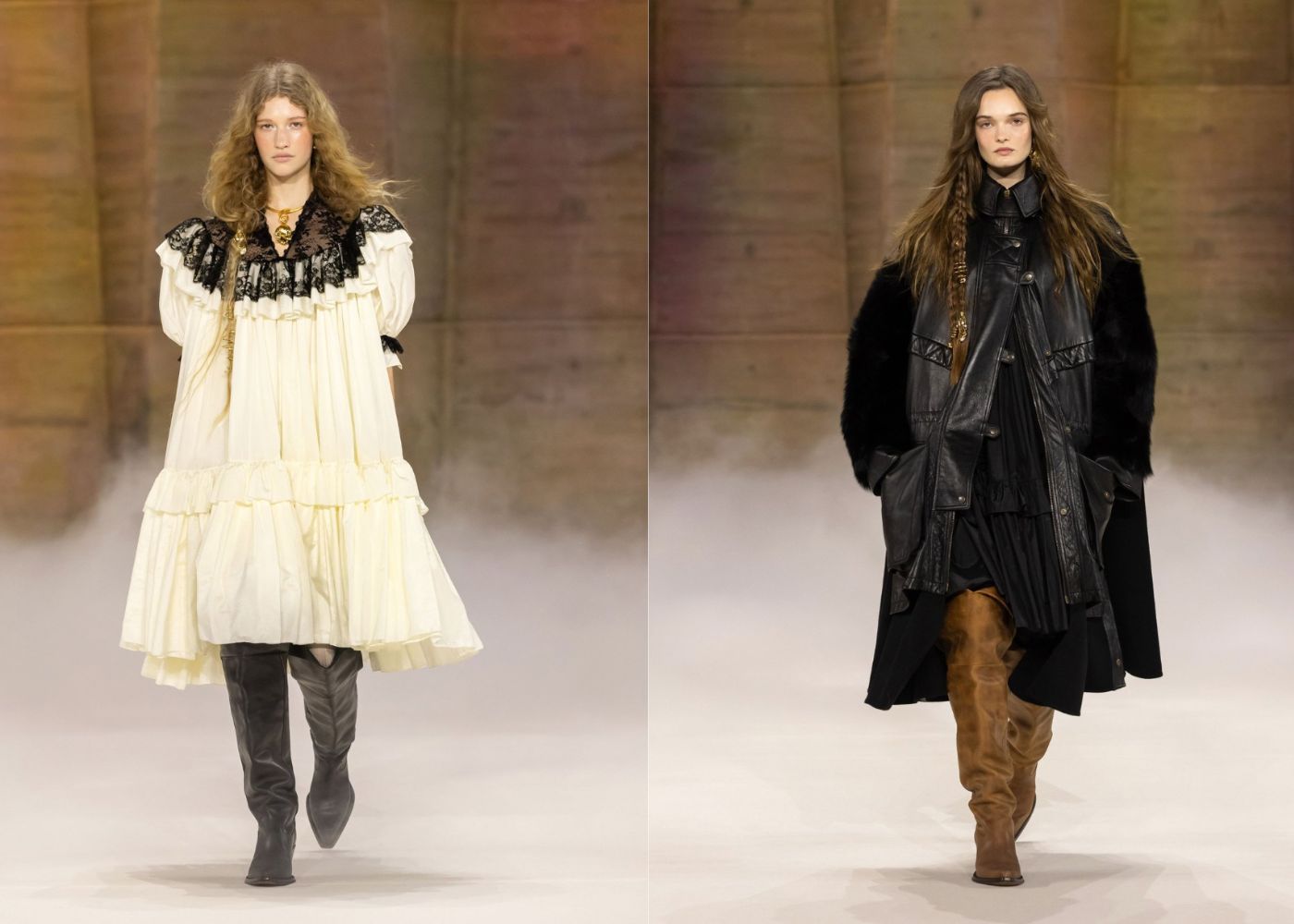
As quiet luxury loses its hold, there’s a new palpable shift on the runway towards an emphasis on material disobedience, with high-fashion brands embracing a boho-chic sensibility that leans into dark romance and a more lived in feel.
Up-and-coming Alice Stephenson (sssilk666) is a London-based designer who sits within an emerging wave of talent who are working with a fashion practice grounded in tactility and process, drawing the wearer into an anachronistic fantasy of her own making.
Her pieces, stocked at Bleaq and Atelier100 and worn in shoots by singer Laurel, are inspired by 18th-century paintings and antique fashion.
She runs a regular stall at Portobello Market from Friday to Sunday, where she sells a curated mix of sssilk666 garments alongside vintage archival pieces sourced through thrifting and her own wardrobe.
Alice works with deadstock fabrics and materials sourced from second hand shops. Often produced as one-offs or in strictly limited runs, her garments carry a heightened sense of rarity and intimacy.
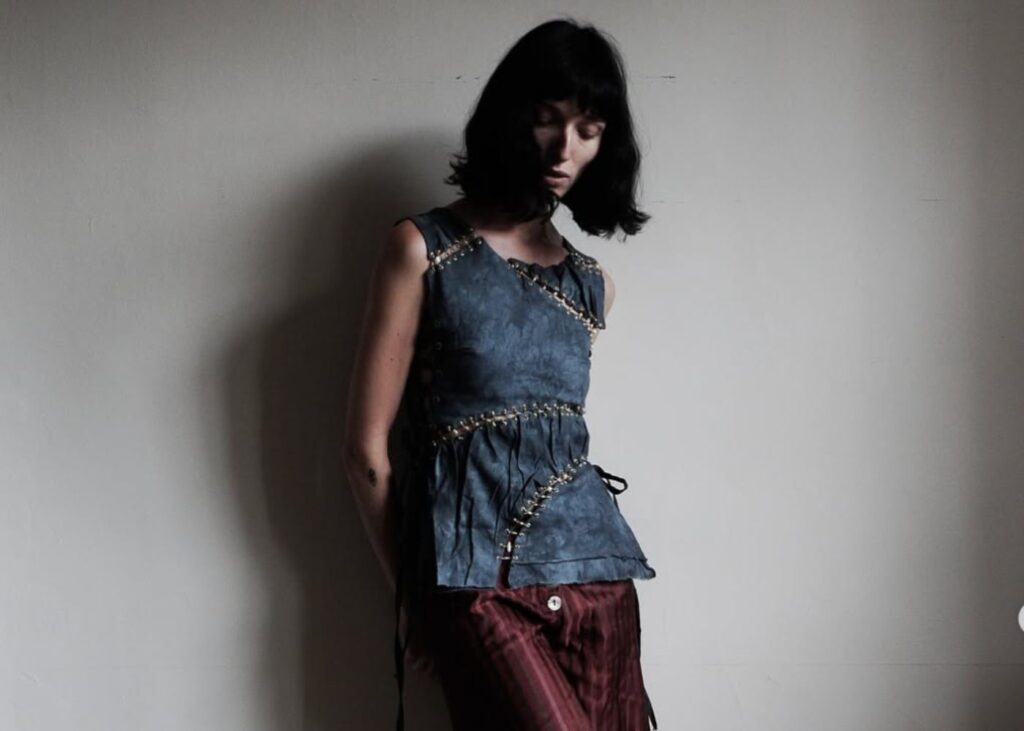
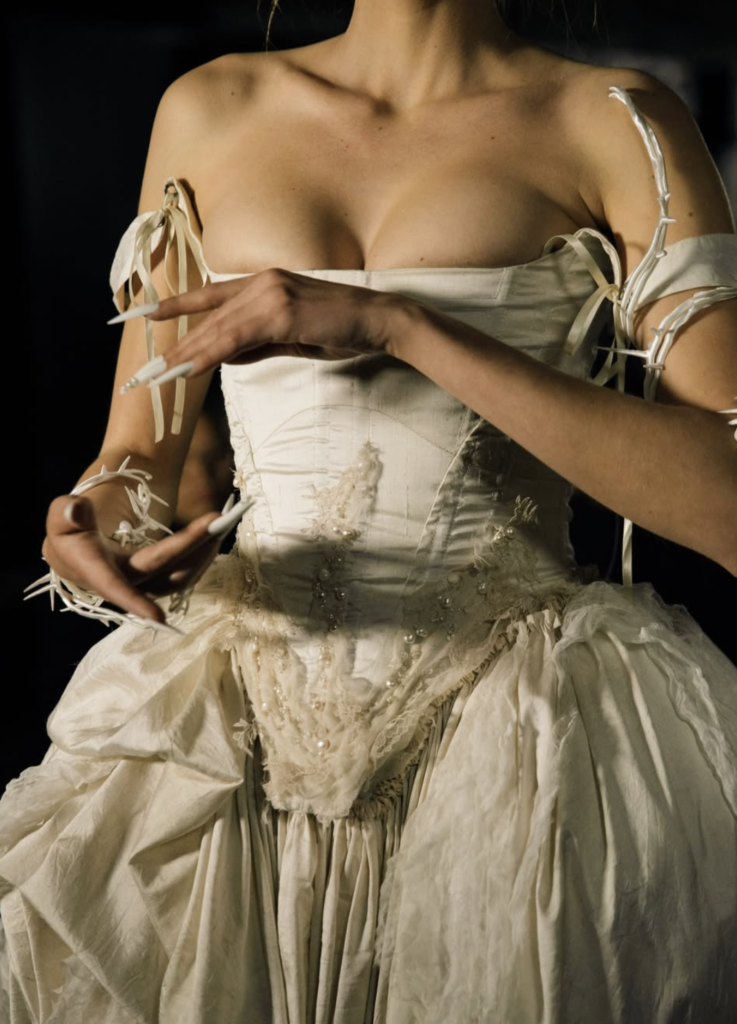
Key looks include ruched corsets, hand-dyed linen asymmetrical tops adorned with pearl inserts, and exposed seams, leather breast plates, and bonnets cut in unexpected materials, where construction is often left visible. The garments feel deliberate but not overworked, with a tension between hard and soft – leather and lambskin set against ethereal, hand-dyed silks.
For Alice, inspiration begins with a desire to create pieces that serve a clear role within her eclectic wardrobe. A jacket that sits over a pared-back skirt, or a bonnet to add dimension to her outfits. She designs instinctively, led by what she would actually wear. If a piece doesn’t hold her attention, it simply doesn’t get made.
She is guided by a sharp eye and an instinct honed through years of thrifting, and points out that she wouldn’t produce anything that she herself wouldn’t be interested in wearing. “If I didn’t want to wear it, I’d doubt my ability to sell it to someone else.”
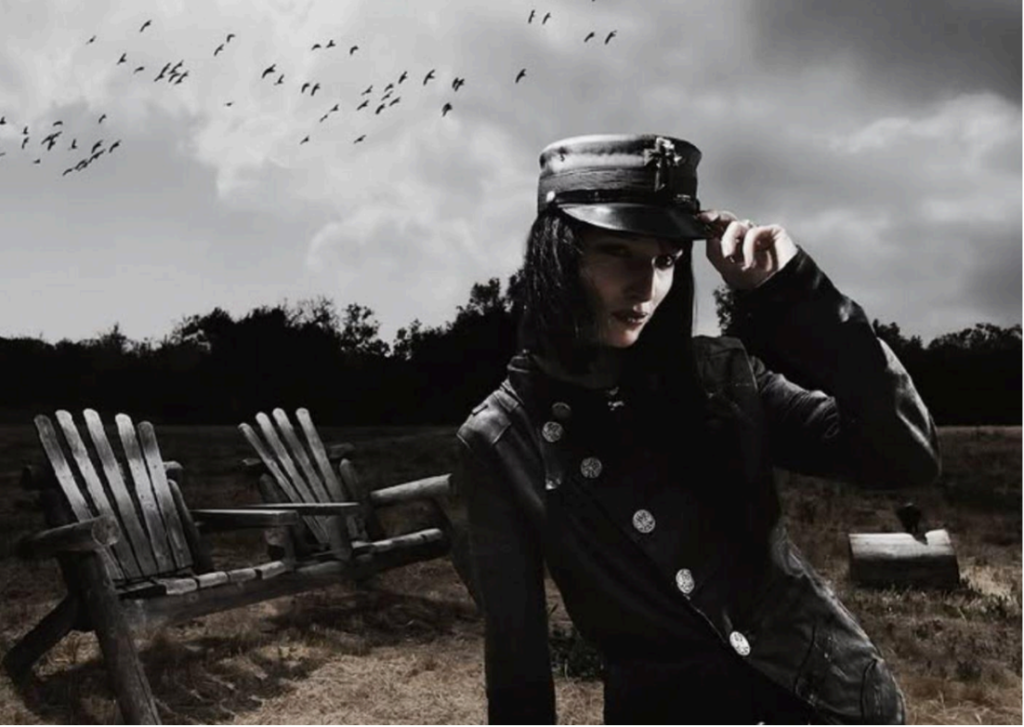
That instinct builds into what she describes as an “imagined past” – a consistent world where garments feel like they belong to a different time but serve a clear purpose. Headwear is a trademark of her collection: aviator bonnets and Victorian pastry hats are reworked in unexpected materials like leather, which are ruched or left raw-edged, with long tieable straps.
“For the past year or so I’ve been designing from my interpretation of the perspective of some kind of androgynous chimney sweeper / lesbian rent boy living both before and during the industrial revolution… the notion of being caught wearing a very decadent hat during rush hour, exposed knees in winter.”
There’s a notable sense of displacement in the work, in garments that don’t quite sit in one time or place. That carries into her leather pieces, which take on an almost anatomical quality, shaped by an interest in the body not as surface, but as structure.
“Some of my leather work at the moment feels like an attempt to reveal the interior of the body. I’m interested in the contour of the spine and the skull, but the pieces tend to have their own interior logic rather than needing to correspond to each other. Organs without a body perhaps.”
Rather than smoothing things out, Alice leans into irregularity.
“With the silk dyeing, I’m still not over the excitement of not knowing exactly how it’s going to turn out. There’s a relinquishing of authorship, the material decides.”
That unpredictability becomes part of the process. Natural fibres, uneven dye, and slight imperfections are embraced rather than corrected, unless the result feels too flat or uninteresting.
A soft femininity runs through her work, realised in silk chiffon, ruffles, and freshwater pearl accents.
That softness extends beyond texture into her wider approach. Working with natural fibres and slower processes, she’s conscious of how garments exist over time. “I use natural fibres because – like the human body – they come from dust and will return to dust. It feels quite contrary to the aggressive permanence of more modern materials.”
Asked what she hopes the wearer will feel when wearing her clothes, she describes a “sense of gentleness and stillness,” a kind of incubating comfort that runs through her work.
More broadly, she wants her clothes to offer an escape from the harshness of the city, something soft to return to against the rigidity of urban life.
“Everything in cities feels so robust and factual; the concrete, the metallic shuttle of the tube. It’s very comforting for me to have something soft to incubate me, a gentle warmth I can extend to those around me.”
In a moment where contemporary fashion is moving away from polish and towards a liminal space grounded in emotion, Alice’s work feels firmly in step. Looking ahead, Alice is working on a stop motion film featuring miniature sssilk666 designs, and hopes to premiere it at her pop-up on the 17th of May at Hemeis Kitchen in Dalston.