Photo Credits:
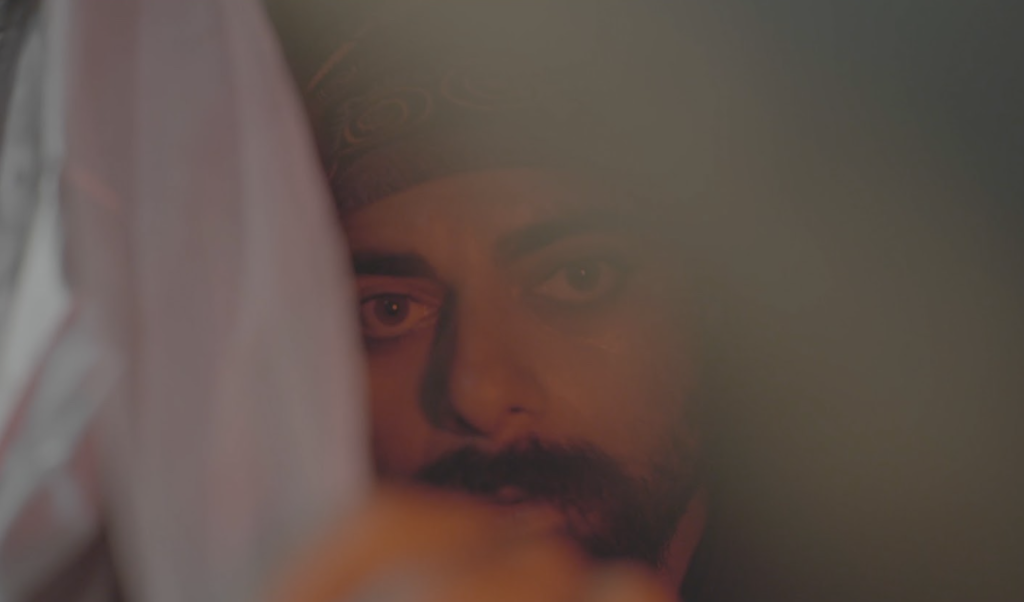
‘Migratory Bird’ is in its final stages of editing. Like Aarshik, the main character of the feature-length film, Aman Anam has been on a long journey.
The independent filmmaker is currently editing the rough cut of his highly personal new film. ‘It takes so much of my energy to arrange everything and put them together.’ Aman says. ‘There is so much data, and the laptop sometimes doesn’t work properly. But strangely, it gives pleasure as well when I edit and complete a sequence.’
Aman’s journey started in India where he grew up and fell in love with a particular art form. ‘I joined a theatre group in my home town at a very young age.’ Aman says. ‘My eldest sister used to do theatre so she’d take me with her several times. I remember my first big role was in a play called ‘Girgit’ (Chameleon).’
Aman has fond memories of those performances. ‘In some of them we were just laughing while delivering the dialogues. I was playing the character of a police commissioner.’
In India, back then, theatre was often looked down upon. ‘Doing theatre was sort of not allowed at that time when I started. I was young, but my sister would get beaten for doing theatre. It was considered as some kind of profane work in our culture.’
‘She fought for it and continued doing it. I used to hide that I did theatre from my friends.’
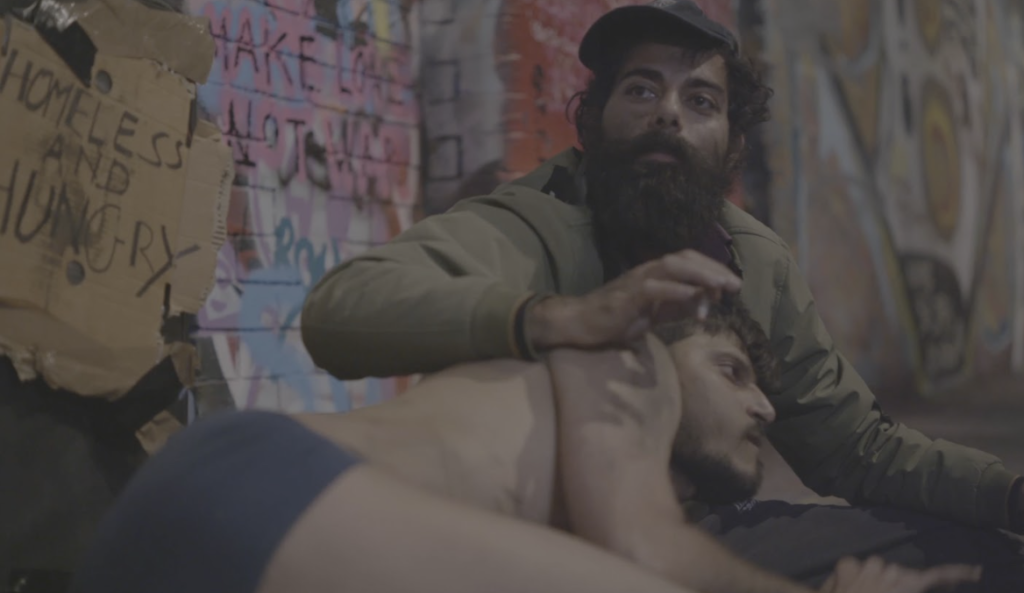
Photo Credits:
This wasn’t enough to deter Aman from pursuing his dreams. ‘When I started doing it full-time, it felt like a revolutionary step. It was in 2013 that I chose to become an artist. Since then I’ve been in love with art.’
Producing works with little to no money is a mindset that Aman has grown up with. ‘The theatre I used to do in India was sort of similar to the idea of Jerzy Grotowski’s Poor Theatre. There was barely any money involved. We’d ask the audience for donations after every performance and that would cover our food and travels but we weren’t getting paid.’
Somehow, they made it work. ‘If we didn’t have costumes or appropriate props, we’d create some solution for it. We’d build our own set, costumes, and props. If something went wrong, we’d have to react fast.’
This way of working has been embedded in Aman’s creative working style. ‘These practices were like training for me and that’s more or less what we need for making independent cinema.’
‘The theatre I did was not for money. The film I’m making is not for money. It’s for love. Love is the most essential drive for art.’
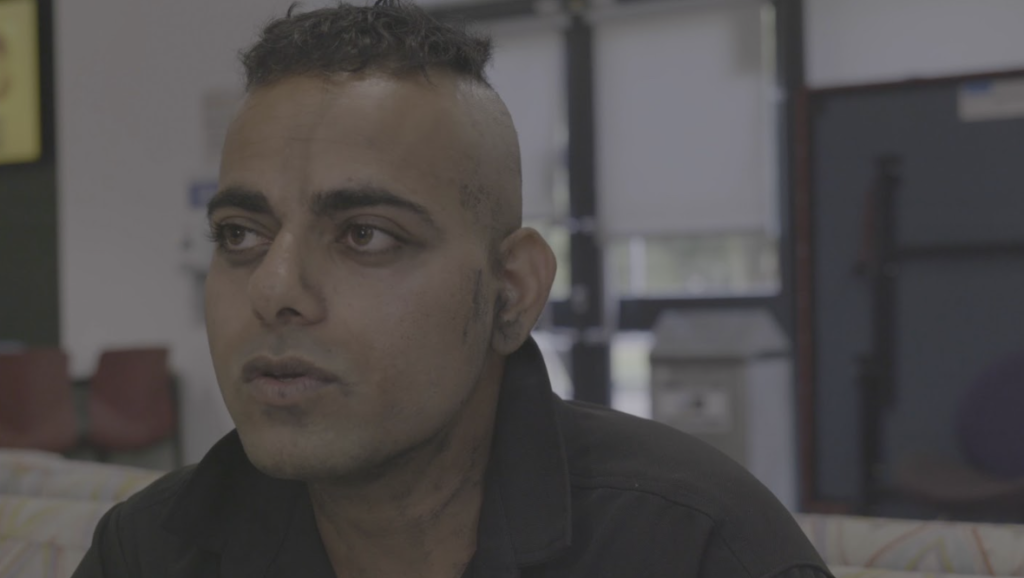
Photo Credits:
Filmmaking is an art form that Aman has a deep reverence for. ‘I love that I can express my inner feelings through this medium with a sense of freedom with no boundaries. It pushes and pulls me to be honest to myself and to the world. I feel like a freedom fighter.’
Aman made the move to London in 2019. It was during this time he came up with the idea for ‘Migratory Bird’. ‘During Covid, I made a short film on isolation.’ Aman says. ‘I still had that idea in the back of my mind. Then I wrote a play called ‘Homeless’ in 2023. Then my brother suggested I travel to Berlin by bike to meet my cousin.’
‘I said yes almost jokingly, but then I said ‘What if I really do it and film it? What if I make a film about it? What if a character really does that?’ My brother also encouraged me.’
Aman also took inspiration from elsewhere. ‘During those days I watched many films of Park Chan-wook, Abbas Kiarostami, and Federico Fellini.’ Aman says. ‘I was reading Fyodor Dostoevsky’s ‘Crime and Punishment’. Poetry of Pash. I’d like to mention Pash’s poem ‘The Most Dangerous’ specifically.’
Aman took these inspirations and his ideas and started work on ‘Migratory Bird’. ‘I came up with a story in a few days. All I knew was that I was going to make it happen. But how? I didn’t know.’
Aman set out to make it a reality. ‘Slowly. Slowly I built a small team; me, my cinematographer, Yashasvi Chadha, whom I met by accident, and two assistants, Mahya Rostami and Tanay Solanki.’
Then, the cast. ‘I asked some friends to act in it. I have many actor friends and they were happy to join this project.’
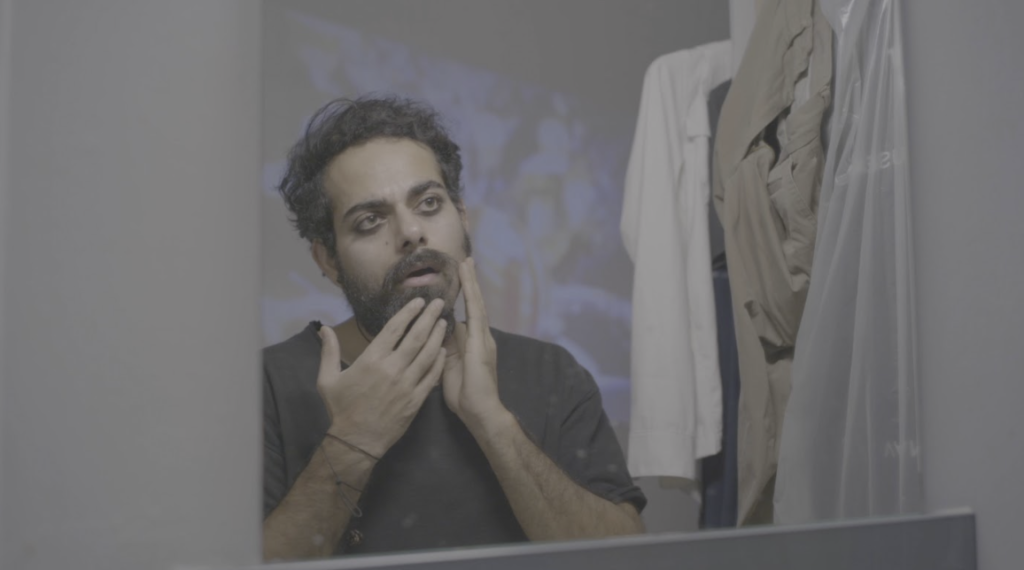
Photo Credits:
‘90% of the people were professional actors so they did it either for passion, belief in the project, or perhaps for friendship. 10% were non-actors; they did it for friendship.’
Aman has worn many hats to bring this film to life; directing, acting, editing, and even creating the music. ‘I’m a trained actor, so I approached the character as a dancer would approach unknown music, or as a carpenter making a new chair. For direction I had to work harder as this is my first feature film as director. I’ve studied directing and also studied music. For music I’m taking some help from a friend.’
This way of working could be traced back to his theatre roots. ‘In India, I was working in several theatre groups at the same time. I was directing, acting, and doing music in our shows with the help of other team members. There was a culture that everyone was involved in almost everything, even carrying stuff and cooking together for each other. It was some of the best times.’
‘So overall, this whole project was similar to doing that kind of theatre. The difficulties were not new but the solutions were new.’
‘Doing multiple things together has some advantages. l can imagine a scene according to the music or take big risks in acting and directing. I wouldn’t think any producer or any other authority would let me experiment with the kind of acting and directing I did in the film considering that it’s my first project.’
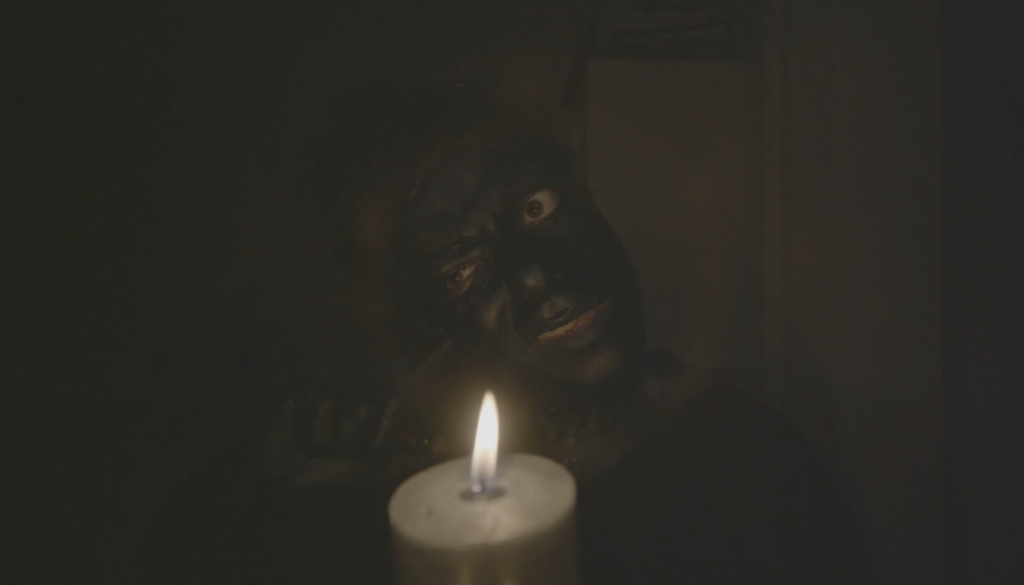
Photo Credits:
This meant Aman had to disconnect himself from certain roles at different times. ‘When I was preparing myself for the role my whole focus was how to separate my actor and director side. It was sometimes really painful. I was being hurt internally.’
‘I was relying on the team when it was too much. I tried to give my best in both acting and directing, but there were some moments I couldn’t be 100% present as a director, and sometimes while acting, because I’m a human being, I couldn’t switch off and on. Those moments were something to work on if I ever do it again. Anyway it’s up to the audience how they perceive it.’
The cast and crew had to be clever with their limited resources and time. ‘We did mostly gorilla-style shooting.’ Aman says. ‘We had only one or two takes with every shot. We had to adapt according to location, situation, timing.’
‘We all knew how we were making it happen so everyone adapted accordingly. The only rule was not to capture any face of any individual in public while shooting outdoors which was really challenging.’
For Aman, there are certainly benefits to independent filmmaking. ‘I think in Independent cinema the artists have much more freedom to take risks and do some experimental work. There’s not much pressure of earning big money.’
‘We used improvisation as a tool in our film. I personally love improvisations. It has a sense of collectiveness. So In this film there were some improvisations that I really wanted to keep so I adapted the next scenes accordingly without hurting the core of it. So the whole film is a collective art piece.’
That adaptability was key to the whole process. ‘I was also discovering new things in the script during the process.’ Aman says. ‘I didn’t have everything fixed in advance. Personally, I believe that if I know exactly how the scene is going to be, there’s not much fun in it for me. I already know it. I enjoy it more when I don’t know what is next and we still make it happen.’
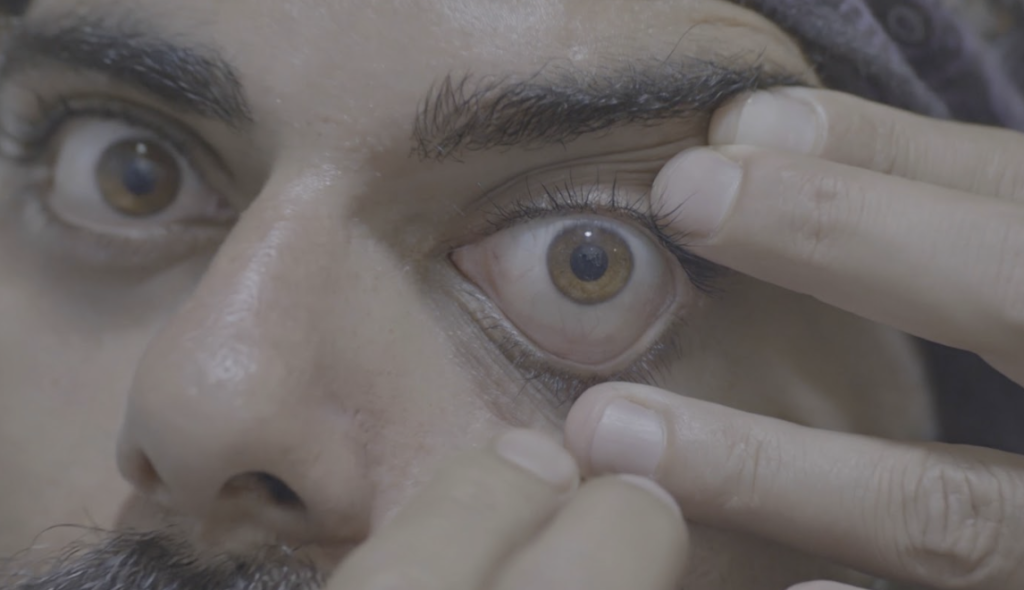
Photo Credits:
That’s not to say there weren’t some real headaches. ‘We couldn’t shoot some scenes. I had to amend the script over and over again. There were times when we didn’t shoot a single scene for 6 months.’
‘The film took two years to complete which was supposed to take 3 months in an ideal situation. It happened due to the lack of resources. But it pushed us to be more creative and find creative solutions.’
Nothing was going to stop Aman from finishing the film, however. ‘The film kept holding its own soul by itself and survived beautifully throughout the journey. It even grew along the waiting time period while we were also gathering all necessary weapons to shoot.’
The film has taken Aman all the way to Berlin. ‘Our original plan was to go from London to Paris and then Paris to Berlin by bike. However due to the lack of money and resources we couldn’t do it.’
‘The cinematographer and I went from London to Brighton and from there to Newhaven by bike. Then we left one bike with a friend and took another bike on a ferry from Newhaven to Dieppe. Then from there to Paris my cinematographer went by train. I went by bike and train.’
Aman almost made it the whole way with his bike. ‘I remember it was only for ten to fifteen days, so we had to leave the bike behind in Paris and go to Berlin by flight. We adapted our scenes accordingly as we couldn’t shoot the travelling part. We did some outdoor shooting in Berlin.’
Aman has been on his own personal journey alongside his film. ‘I know more about existential crises than before. I lived it in a way while making the film.’
‘I can’t say it was difficult, can’t say it wasn’t either. It was a journey.’
The film’s long journey is nearing its end, as Aman prepares to share it with audiences. ‘We’ve made a list of festivals. We’ll start submitting the film by September and we have big hopes for it.’
He had one last message for readers.
‘Art and love are inseparable revolutionary forces.’